azeroth survivors spell upgrades: how cards, rarity and level-up choices work
Updated 2026-11-15
Version checked 2026-11-15
azeroth survivors spell upgrades are card choices, not a fixed rank table: each level-up offers three cards, and a card can teach a new class spell, raise an owned spell, or add a passive. Card rarity changes the size of the stat bonus. This guide explains the verified values, offer weights, rank cap, Banish, and Luck.
How azeroth survivors spell upgrades work
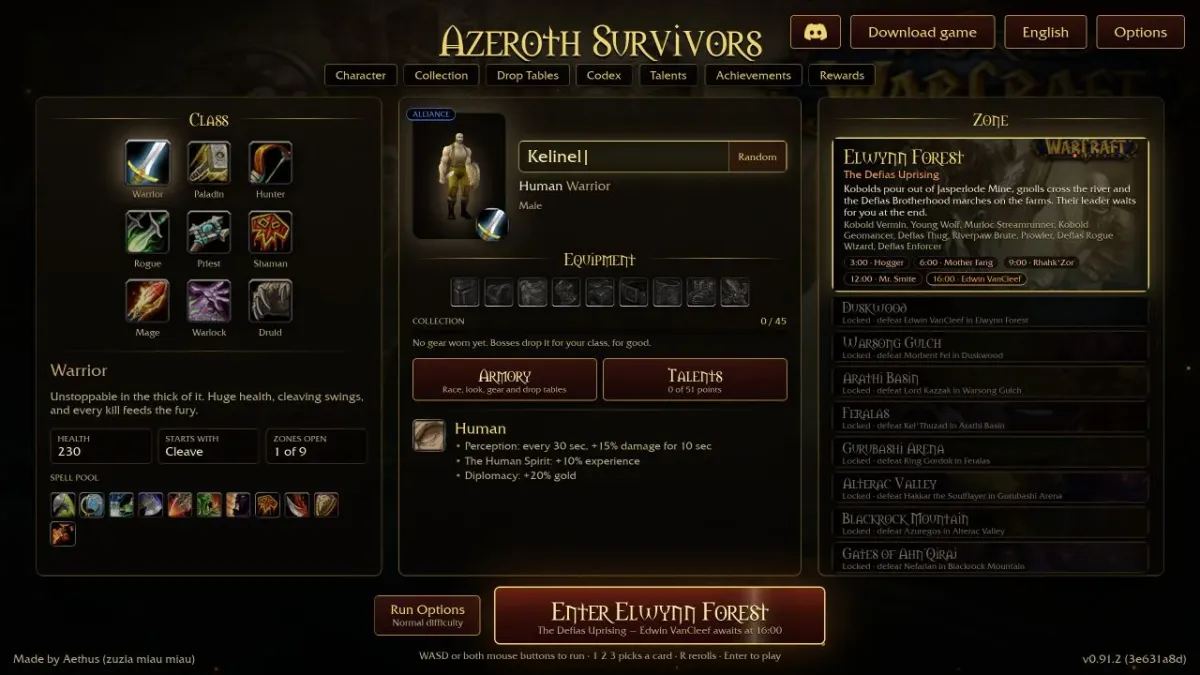
Azeroth Survivors is a free browser survivor game with nine WoW-themed classes. A run starts with one class skill and draws upgrades from that class's own skill pool; a run lasts 15 minutes and holds six active skills plus six passives. In practical terms, azeroth survivors spell upgrades are the level-up cards that either teach a new class spell, raise the rank of a spell you already own, or add a passive buff.
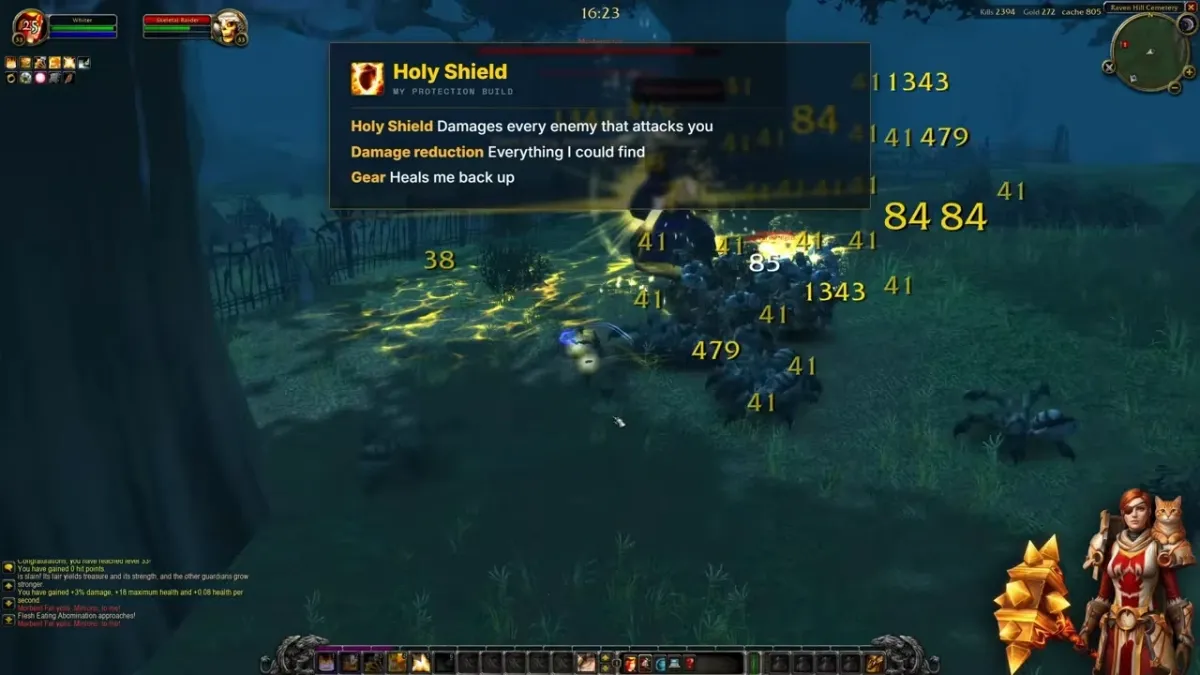
Every level-up deals three cards to choose from, as stated in the card data. A card can teach a new class spell, raise the rank of one you have, or add a passive buff. This is why the system has no single rank 1 to 8 value table: upgrade cards alter individual attributes instead of filling one fixed progression row.
- Three cards per level-up: one can be a new class spell, an owned-spell rank-up, or a passive.
- Card text can change damage, cooldown, area or extra targets; the values depend on card rarity.
- The offer is drawn from an eligible pool, so an available spell is not guaranteed to appear on the next screen.
The three-card hand is the core loop: you see up to three eligible offers, pick one, and continue. Because the pool includes new spells, owned-spell ranks and passives, the same run can mix class skills and generic passives. A new class spell competes with rank-ups and passives rather than appearing on a separate track.
Card rarity and the bonus each quality grants
The first upgrade card shows how rarity scales the same attribute. Damage moves from 18% at Common to 65% at Legendary; cooldown reduction moves from 7% to 23%; area moves from 12% to 50%. Extra-target upgrades are unavailable on Common cards, where the row uses a dash.
| Quality | Damage | Cooldown reduction | Area |
|---|---|---|---|
| Common | 18% | 7% | 12% |
| Uncommon | 25% | 10% | 18% |
| Rare | 34% | 13% | 25% |
| Epic | 46% | 17% | 35% |
| Legendary | 65% | 23% | 50% |
Rarity also scales the baseline stat value of a card: Rare cards give 1.8x, Epic cards give 2.4x, and Legendary cards give 3.2x baseline stat value. That scaling is separate from the specific attribute rows above, so use the card's own text to confirm what it changes.
The dash on Extra targets is not a zero value; it means the option is not offered at Common. If you are comparing cards, check the attribute row first, then the quality. A Common area card and a Legendary area card use the same area row but land at different values.
Six spell slots and the rank 8 cap
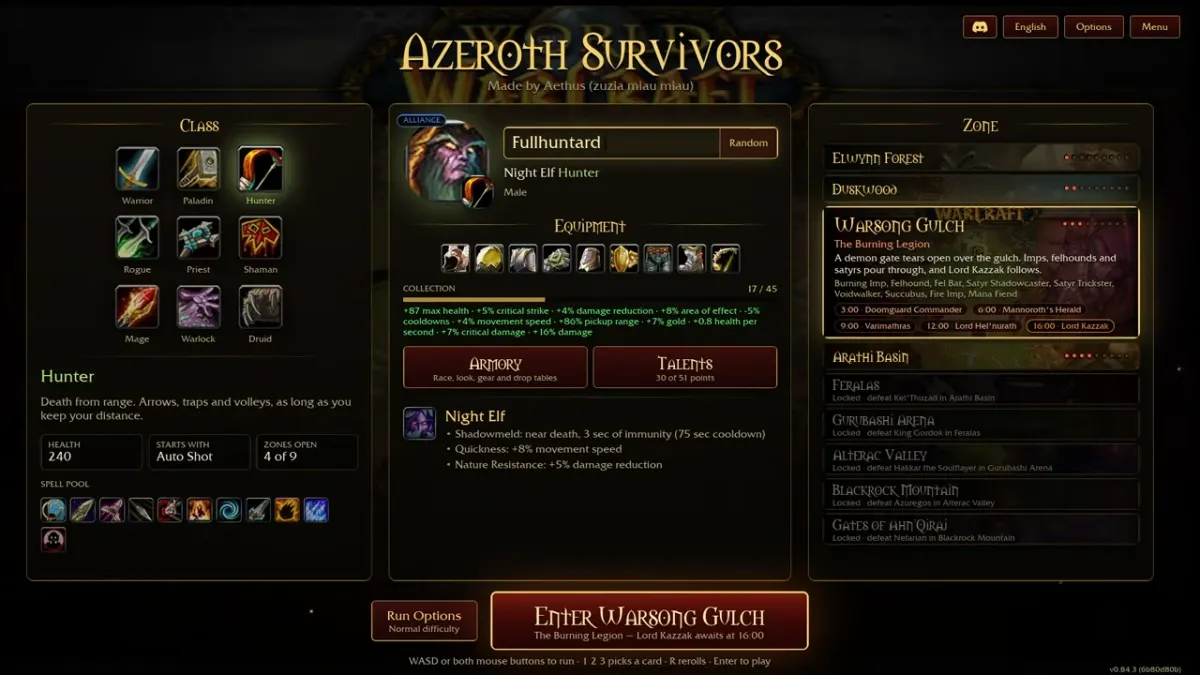
A run allows six active spell slots, and full slots stop new-spell offers. You can carry at most six actives plus six passives per run; duplicate picks rank a spell up to 8. The cap matters because a rank-up card for a spell you already own keeps a weight of 1.2 until that spell hits rank 8.
Spell rank cards are Uncommon for a plain rank, Epic when ranks 3, 5 or 7 add a target to a spell that picks targets, and Legendary for the top rank, 8. At rank 8 the rank card is Legendary and the spell is capped; it does not continue past rank 8.
The extracted compendium uses a damage multiplier of 1 + 0.3 × (rank - 1) and a cooldown factor of 0.93^(rank - 1) for rank values without passives. These formulas explain why a rank 8 spell can look much stronger than a rank 1 spell even though there is no fixed 1–8 value table for azeroth survivors spell upgrades.
Six active slots are a hard run limit, while six passive slots sit alongside them. Once active slots are full, new-spell offers stop, so the remaining spell cards tend to be rank-ups for the actives you already hold. That is the point where duplicate picks become the normal way to push a spell toward rank 8.
Offer weights: why some cards show up more often
The HUD offer weights are 1.2 for upgrading an owned spell, 1.0 for a new class spell, 0.8 for upgrading a passive and 0.5 for a new passive. A brand-new passive is the least likely offer, weighted 0.5 while you hold fewer than six passives.
| Offer type | Weight | Condition |
|---|---|---|
| Upgrade owned spell | 1.2 | Until that spell reaches rank 8 |
| New class spell | 1.0 | Eligible pool |
| Upgrade passive | 0.8 | Eligible pool |
| New passive | 0.5 | While you hold fewer than six passives |
The offer pool also depends on your current build. A rank for a spell you already own is weighted 1.2 each until the spell reaches rank 8. Each level-up draws up to three choices from the eligible pool, so an available spell is not guaranteed on the next screen.
Weights are relative, not guarantees. A 1.2 owned-spell rank card is more likely than a 1.0 new class spell, but the pool still has to contain an eligible card and the screen still draws only up to three. This is why a high-weight card can miss a screen and a low-weight new passive can appear when you have fewer than six passives.
Rerolls, Banish and Skip
The normal Azeroth Survivors spell upgrades offer has no reroll. Banish is the once-per-run perk that redeals the hand: banishing a card removes it only for the current run, not permanently from your account. At ranks 2 and 3, Banish extends to two and then three uses a run.
Because Banish redeals the hand, it can change a bad set of offers without adding damage or health. The verified card material does not give a separate Skip mechanic, so treat Skip as an unverified UI detail rather than a card stat.
A banished card never comes up again that run; the removal lasts for that run and is not a permanent deletion from your account. That makes Banish a run-level tool, not an account-level card filter.
Banish is best used when the current hand has no card you want and you still have a use left. Because it redeals the hand, it changes the current offer rather than the whole run's card pool. The removal applies only to that run, so a later run starts with the card available again.
What Luck changes in azeroth survivors spell upgrades
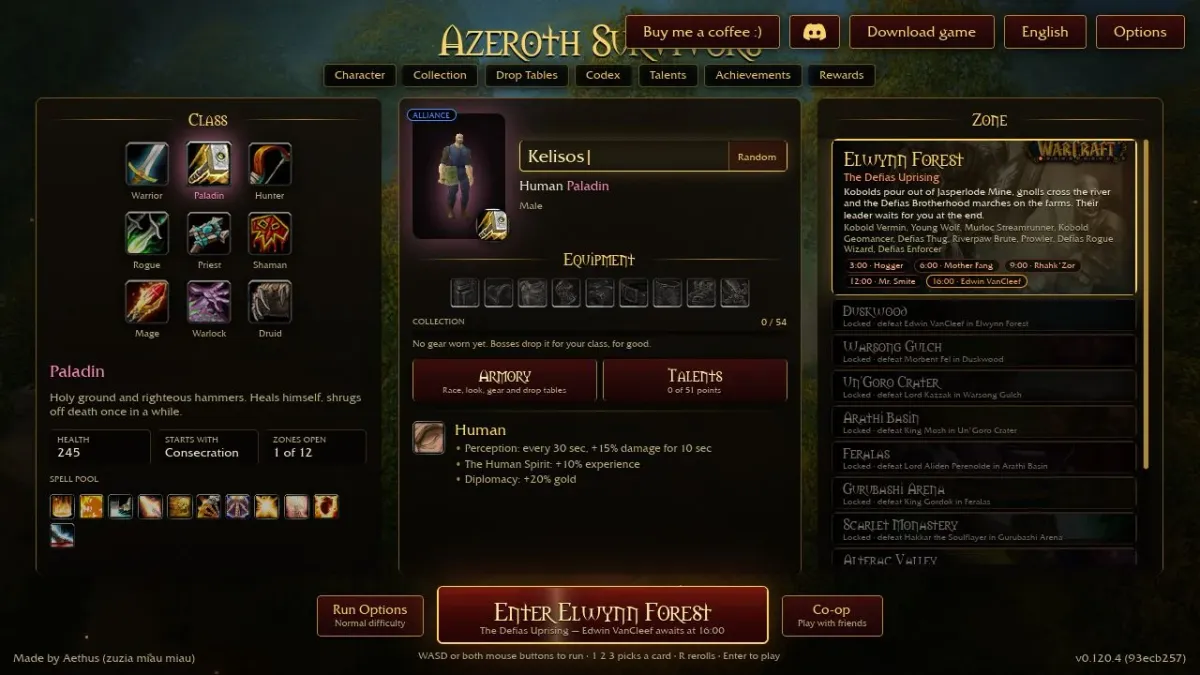
Luck does not add damage or health by itself. It only improves the odds that a level-up offers a rarer upgrade. In other words, Luck is a rarity-odds stat for azeroth survivors spell upgrades, not a damage or survivability stat.
Is Luck worth taking? If you are fishing for rare cards and have a passive slot open, Luck is the supported pick for rarity odds; if you need damage or health, it gives neither. The verified data does not price the exact rarity boost, so the choice depends on your open passive slots and current build.
Luck competes with passives that directly change damage, cooldown, area or survivability. Since it does not add damage or health by itself, it is a meta-stat for players who want higher-quality offers rather than immediate combat power. Take it when your build can spare a passive slot and your current spell ranks are already stable.
For direct checks on Luck, use the Luck page linked in the Sources section; for broader passives, use the passives page.
Attribute-by-attribute upgrade table
Use this table as a first-card reference, not as a full rank table. The first damage upgrade card gives 18% extra damage at Common and 65% at Legendary; cooldown reduction starts at 7% on Common and reaches 23% on Legendary; area starts at 12% and reaches 50%.
| Attribute | Common first card | Legendary first card |
|---|---|---|
| Damage | 18% | 65% |
| Cooldown reduction | 7% | 23% |
| Area | 12% | 50% |
Extra-target upgrades are unavailable on Common cards; a dash marks that row. These numbers are the first upgrade card values; they are not the rank 1–8 values. For ranks, use the damage and cooldown formulas above, and for card quality use the listed rarity multiplier.
If a card's text conflicts with the first-card table, use the card's own text and the rank formulas. The table is a reference for the first upgrade card, not a promise that every card of that quality offers the same attribute.
Sources and values still unverified
The values on this page come from peer pages for Azeroth Survivors cards, abilities, passives and mechanics; the sources below list each URL. Where the page material does not settle a detail, it is listed as unverified instead of being given an invented number.
Rings, trinkets and amulets are part of the item system; the item mechanics live on Items, and set details are on Item Sets. For azeroth survivors spell upgrades, the verified numbers are the rarity table, the rank cap, the offer weights, the Banish uses and Luck's rarity-only role.
The page does not rank classes or builds; it only explains card behavior. For class-specific routes, use Classes and Builds. For a broader comparison, use Tier List.
- A separate Skip control in the current level-up UI.
- The exact rarity weights Luck adds to the offer pool.
- Extra-target values on non-Common cards; the verified rule only confirms Common cards do not offer Extra targets.
- The full ring, trinket and amulet acquisition rules; the item page is the correct place for those mechanics.
What does Luck do in azeroth survivors spell upgrades?
Luck does not add damage or health; it only improves the odds that a level-up offers a rarer upgrade.
Why might a new spell not appear on my level-up screen?
Each level-up draws up to three choices from the eligible pool, and full six-spell slots stop new-spell offers, so an available spell is not guaranteed on the next screen.
What changes when a spell reaches rank 8?
At rank 8 the spell is capped and the rank card is Legendary; targeted spells can also become Epic at ranks 3, 5 and 7.
Is Luck worth taking in Azeroth Survivors?
If you want rarer offers and have an open passive slot, Luck is the supported rarity-odds pick; it gives no damage or health, so it is not a direct combat stat.
What is the best Azeroth Survivors build?
Do Azeroth Survivors builds change between patches?
Builds can change between patches when patch notes alter cards or class skills; Updates is the only version signal to check.
How do you get rings, trinkets and amulets in Azeroth Survivors?
Why do azeroth survivors spell upgrades sometimes skip an available card?
For azeroth survivors spell upgrades, the eligible pool can be larger than the three cards drawn, so a card can be available and still not appear on the next screen.
Last checked 2026-11-15 against the listed peer pages. Values that were not settled are kept in the unverified list rather than guessed.